
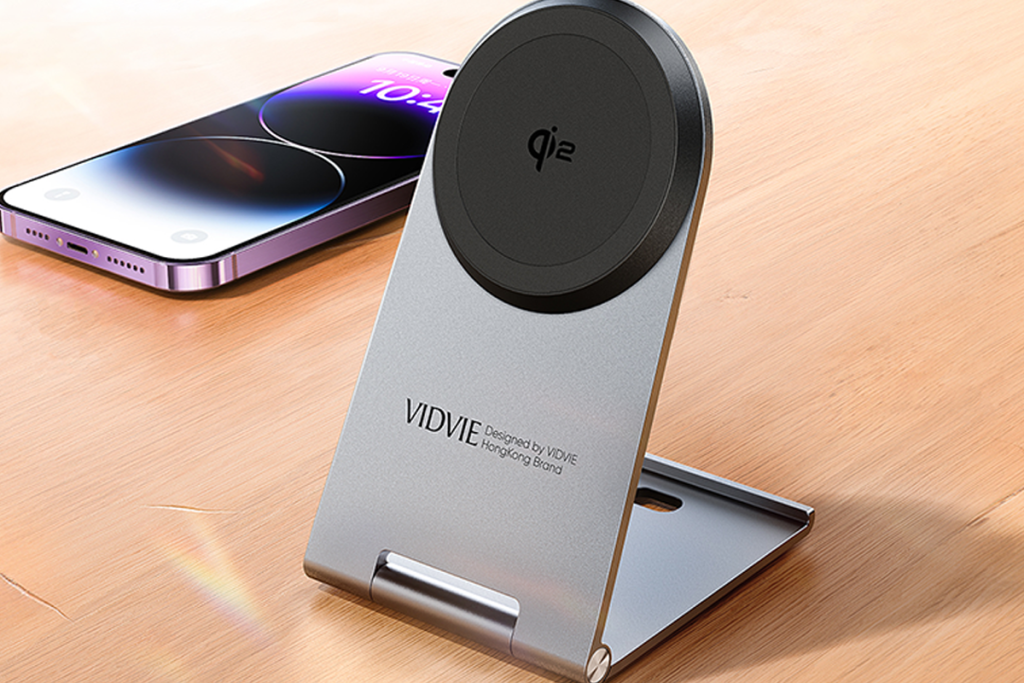
Wireless charging has been going viral these days. In this guide, VIDVIE breaks down exactly how wireless charging works, the tech behind it, and the pros and cons. Whether you get a new charger or run a wholesale mobile accessories business, there’s something here.
Table of Contents
Types Of Wireless Charging
There are loads of wireless charging types, and they all work their way.
Inductive charging: The most common way of wireless charging. Just put your phone on a charging pad and let it do its thing. The pad and your device, and power to the phone battery through the magnetic field.
Resonant charging: This wireless charging lets you power up from further away and isn’t fussy about perfect alignment – you can even charge multiple gadgets at once. Charging efficiency will decrease as the distance increases, the tech is more fiddly to make.

Radio waves have been around a while – they beam power through the air like your favourite radio station, then your gadget catches it and turns it back into juice. Handy for smartwatches and stuff where you can’t be bothered with plugs. It’s a bit slow, and if there’s too much interference around, it can get a bit temperamental.
ECWPT (Electric-field Coupling Wireless Power Transfer) works by zapping power between two plates: one in the charger, and another in your device. Get them close enough, and they are charging. Super speedy. But those plates have to be just so for it to work. Mostly seen keeping tablets and laptops topped up these days.
What Is Qi?
Qi is developed by the WPC(Wireless Power Consortium) and works with pretty much every modern phone out there. The new Qi2 is nicked Apple’s MagSafe tech with magnetic snap-on charging, so your phone sucks into place perfectly. Charges at up to 15W and works across both Android and Apple gear.
How Does Qi Wireless Charging Work?
The Qi wireless charging standard uses the above-mentioned inductive charging to transfer energy from the charging pad to your phone. The whole process is simple. The pad whips up a magnetic field that talks to the coil in your phone, turning that energy into battery juice. In daily life, you just need to put your phone on the charging pad.
Things to Look For When Buying a Wireless Charger
Whether you’re buying for yourself or just wholesaling for phone accessories, picking the right wireless charger ain’t as simple as it seems. Here’s the main point on what matters when choosing one.
Compatibility
First things first, make sure the wireless charger supports Qi tech. Many chargers out there claim to work wirelessly, but not all meet the Qi rules. And double-check that your phone can even do wireless charging.
Charging Speed
Not all wireless chargers are at the same speed, even with Qi rules, there’s a big difference between the old Qi1 and Qi2. Qi1’s a bit slow with 5W .Qi2’s much quicker reaches up to 15w, same as Apple’s MagSafe. Pro tip: if you pair either with a beefy adapter when using MagSafe and you’ll juice up even faster.
Brand Reliability
Consider the big brand. The big names might cost a bit more, but you’re paying for great quality, better safety, and actual customer service when things go pear-shaped.
Features
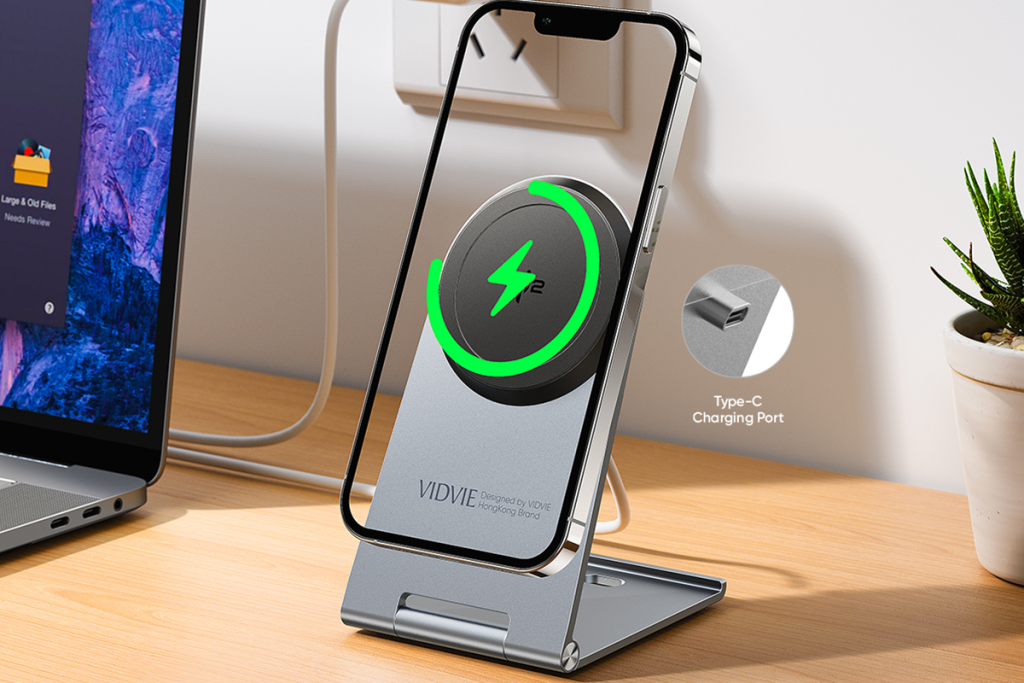
Some wireless chargers come with extra features, such as multi-device charging pads (for phones, smartwatches, and earbuds) or adjustable stands that allow you to charge in both portrait and landscape modes. These features are helpful if you want to charge multiple devices at once or use your phone while charging.
Little-Known Tips
Look for certifications: Make sure the charger is certified by the Wireless Power Consortium (WPC) to guarantee safety and compatibility.
Consider case compatibility: Some chargers may not work properly through thick phone cases. Look for chargers that support charging with cases, up to a certain thickness, to avoid having to remove your case every time.
Is Qi Wireless Charging The Same As MagSafe?
We covered this topic in the last article, but here we’ll quickly go over a few key points. If you’re interested, give this one a read!
Technology
Whether it’s Qi or MagSafe, both use electromagnetic induction to transfer energy wirelessly from the charger to your device. However, MagSafe is smarter because it adds magnetic alignment to keep your iPhone perfectly positioned for faster, more efficient charging. With Qi1 chargers, if your phone isn’t placed just right, charging speeds can be a bit slow. And the latest Qi2 standard has been improved to fix this issue.
Compatibility
MagSafe was built for iPhone 12 and later models. While its charger works with any Qi-enabled device( you can charge Android phones by using extra gears), iPhones get faster charging and that perfect magnetic snap. Qi charging works across more devices, including iPhones, but doesn’t have the same results as MagSafe.
Charging Speed
MagSafe gives iPhones a nice 15W charging speed, but with regular Qi chargers, it’s a bit more unstable. You might get 10W or more, but it depends on what device you’re using, and even where you put it down can make a difference!
Conclusion
Wireless charging is super easy to use. Just put your phone on the pad and you’re free. For buyers, it’s worth keeping the points we’ve mentioned. And if you’re a wholesaler of mobile accessories, you’ll want to look at compatibility, charging speeds and other key specs when buying all products in bulk.