
Ever wondered why fast chargers juice up your phone much quicker than regular ones? Will they damage your battery? And what’s the actual difference in power? In this guide, we’ll walk you through both chargers and help you pick the right one for your customer.
Table of Contents
Fast Chargers vs. Regular Chargers:
Charging speed:
The most obvious difference is the charging speed. Fast charging power is higher, taking 15W or higher, and the charging time is greatly shortened. Some fast chargers can charge 70% to 80% of the battery in just a few minutes. Ordinary chargers generally provide 5-12W of power, and it takes 2-3 hours to fully charge. Another point to note is that some manufacturers’ chargers are marked as fast charging, but they are not fast charging.
Power transmission:
Fast chargers will tweak the voltage to charge your phone as quickly as possible, then adjust it back when the battery’s nearly full. This speeds things up and stops your phone from getting too hot or overcharging. For a standard charger, it just plods along at the same steady pace, usually around 5V with 1 or 2 amps.
Charger and cable:
Fast chargers need decent quality cables and plugs. Thicker cables can support high power without getting hot, and can also support higher voltages. Fast charging also needs sturdy connectors. Thin charging cables may not be able to withstand excessive pressure and may explode.
Fast charging protocol
Fast charging uses tech like Qualcomm Quick Charge, USB Power Delivery (PD), OnePlus Warp Charge/Dash Charge or VOOC flash charging to speed up. Each protocol can be adjusted according to the battery level to provide better voltage and current. Standard chargers generally provide 5V/1A or 5V/2A current, which is slower but more stable and more universal.
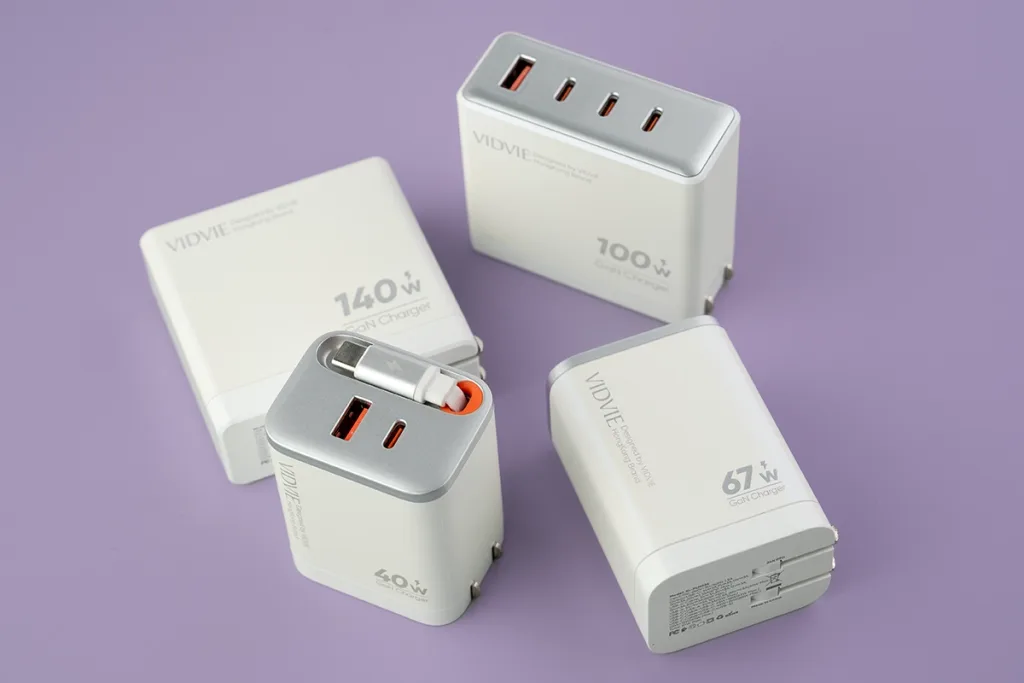
Types of fast charging standards
USB-PD
Apple goes with the USB Power Delivery (USB-PD) protocol, using a USB-C to Lightning cable or a USB-C cable. If paired with a USB-PD compatible charger, you will have quicker charging speeds. USB-PD will dynamically adjust the power flow to ensure battery safety.
Motorola TurboPower
TurboPower technology can smartly adjust, fast charge, and prevent overheating. It can also adapt to your battery’s needs. But you’ll need the TurboPower charger. They come in 15W, 18W or 25W flavours depending on your model.
OnePlus Dash-WARP-SuperVooc charging
OnePlus launched Dash Charge in the early days of their early models. They’ve since upgraded it to Warp Charge and SuperVOOC, which keeps your phone cooler while charging. Unlike those compact USB-PD chargers, OnePlus’s adapters are larger for built-in cooling systems. And they need extra circuitry to monitor temperatures and handle all that extra power safely.
Qualcomm Quick Charge
Qualcomm’s Quick Charge is compatible with most Android phones. After several upgrades, Quick Charge 3.0:Smartly adjusts voltage (3.6V–20V) to improve the charging experience. Quick Charge 4.0/4+: supports USB Power Delivery (USB-PD) for wider compatibility. Quick Charge 5.0: provides 100W+ charging power. Newer versions still work with older QC chargers and are compatible with different brands of power management.
PPS (Programmable Power Supply) Charging
PPS charging is part of the USB Power Delivery 3.0 standard. Unlike some fixed voltage fast charging methods on the market, PPS dynamically adjusts the power output every 10 seconds, perfectly matches what your device needs, and is seamlessly compatible with USB-PD and QC4.0+ devices. PPS can also extend battery life through precise power.
Is fast charging better than normal charging?
Fast chargers sound great, but is fast charging better than ordinary chargers? It is all about your needs. If you’re always rushing out the door and your phone supports fast charging, then fast chargers are right up your alley. But if you don’t care about speed, your phone doesn’t support it, a standard charger might be your best bet.
Key considerations
Battery health
The charger directly affects the battery life of the phone. Standard chargers don’t get as hot, making them perfect for overnight charging or older devices. Fast chargers generate more heat and even put pressure on the battery. Many modern phones use adaptive charging tech. Initially, have a quick charging speed and reduce the charging voltage and current when the battery is almost fully charged.
Convenience
Fast charging can greatly reduce the charging time, especially for emergency charging before going out. It can charge a lot of power at once, which is convenient. But if you’re not in a hurry?A regular charger does the job.
Cost
Different chargers have different prices. Fast chargers tend to be pricer because you’re paying for all that clever tech inside. Fast chargers also need to be compatible with good cables, and certification will also increase costs. Big brands’ll charge even more for their chargers. If you’re buying, it’s worth shopping around for deals or bundle offers. And for wholesalers? Buying in bulk or mixed discounts often gets you better prices.
Conclusion
Fast charging and regular charging are worlds apart. Whether you’re buying for yourself or wholesaling, it pays to stay updated.Want to get a grip on mobile accessories? Keep an eye on VIDVIE for all the newest updates.