

Nowadays, cell phones have become one of our most necessary items. Everything else can be missed, but mobile phones are essential. When your cell phone’s battery dies, you may be helpless. To avoid this issue, you can only carry a portable power supply. But how does a power bank work? This article will explain how it works and what you should look out for during operation.
Table of Contents
- 1 How does a power bank work?
- 2 Different types of portable power banks & chargers
- 3 What is the advantages and disadvantages of mobile charger?
- 4 Battery types
- 5 How many times can a power bank charge my phone?
- 6 How to extend the life of your power bank?
- 7 How to choose the portable charger ?
- 8 What is a power bank for iPhone?
- 9 FAQ
How does a power bank work?
Simply speaking, a mobile power supply is a rechargeable battery installed in a small casing, which acts as an intermediary between mobile phones and other devices and the power grid, providing convenience when you need it. A charge pal works by storing energy when plugged in and then releasing the energy when a device is connected. Most portable chargers on the market contain lithium-ion batteries, known for their high energy density and reliability. These batteries store electrical energy in the form of chemical energy. When you plug the power bank into a power outlet, the built-in circuit regulates the input current to ensure a safe and efficient charging process. When a battery is charged, a chemical reaction occurs inside the battery, storing electrical energy for later use. You only need to connect the USB cable to the power bank and your device to charge.
Different types of portable power banks & chargers
There are many different types of charge pal on the market, but some are not mobile power banks in the traditional sense. What are the differences between them? Below we will unveil the different points for you.
Standard power banks:
The most common power bank on the market has a USB port and can charge a wide range of devices, including smartphones, tablets, and portable speakers. Some brands have additional cables. They have varying capacities and times of use.
Solar power banks:
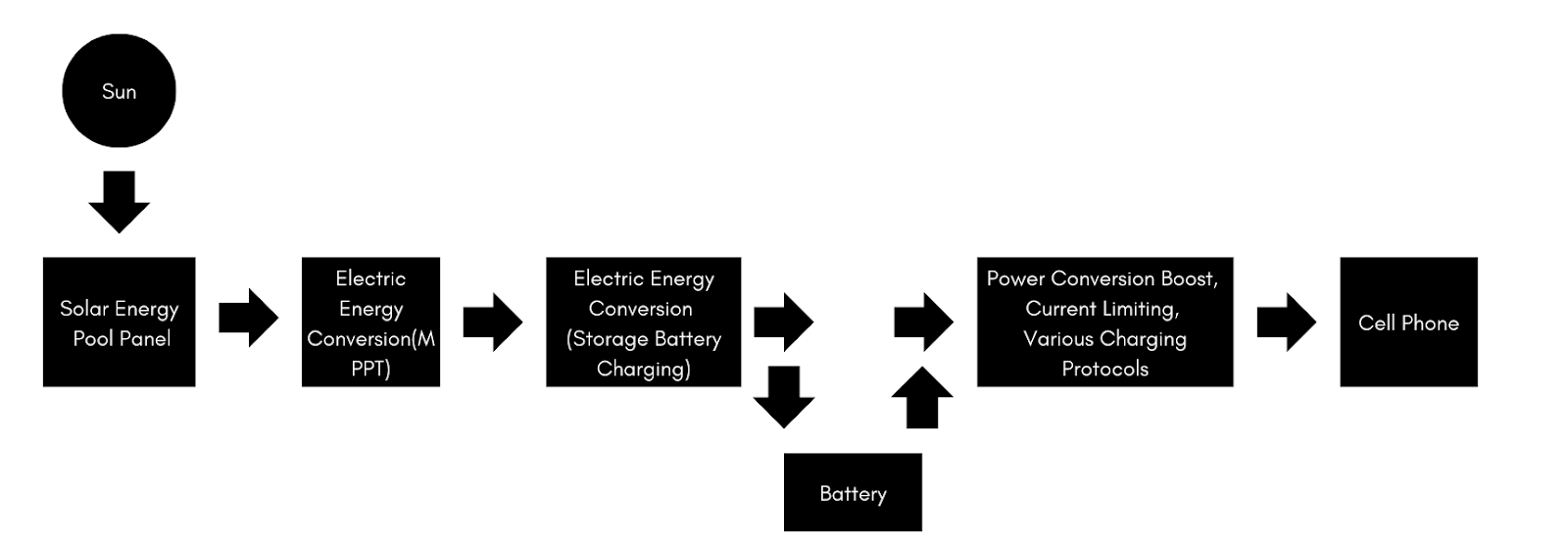
With the improvement of people’s environmental awareness, solar mobile power sources have appeared. They use solar cells to absorb energy from the sun and store this energy in batteries to power devices, gadgets or other devices. This type of product is very suitable for people who travel outdoors to experience life. They can use sunlight to extend the battery life of their devices from another angle.
The technical units required for a complete solar power bank can also be understood as a flow chart of the energy from the sun flowing into the mobile phone:
Laptop power banks:
Designed to power laptops and other large devices, these power banks have higher capacity and voltage output to meet the energy needs of laptops. They usually come with a range of adapter tips to fit various laptop models.
Wireless power banks:
A device that charges based on the electromagnetic wave induction principle, which is similar to a transformer. There is a coil at each of the sending and receiving ends. The sending end coil is connected to a wired power supply to generate an electromagnetic signal. The receiving end coil senses the electromagnetic signal at the sending end and generates current to charge the battery. For consumers, it is even simpler. As long as your mobile phone has a wireless charging function, you only need to place it on the charging side of the wireless power bank. If you don’t have this function, you can use the attached ring charging sticker to plug into the charging port of your mobile phone and use the wireless power bank by hiding the module.
Battery capacities:
According to the size of the battery capacity, it can be divided into Small-sized power banks and Large-sized power banks.
- Small-sized:
These power banks are small and lightweight, making them ideal for carrying around in your pocket or backpack. With capacities of up to 20,000mAh, they give enough power to keep your gadgets running all day.
- Large-sized:
Large power banks with capacity greater than 20,000mAh are ideal for individuals in need of a significant power boost. Whether you’re on a long camping vacation or experiencing a power outage, these high-capacity equipments have you covered.
What is the advantages and disadvantages of mobile charger?
Advantages:
Lightweight and very portable. This means you can charge your gadgets whether you’re traveling, hiking, or just out and about.
Power banks are a useful way to charge your devices when you don’t have access to a power outlet. Whether you’re in a remote place or facing a power outage, a power bank will keep you connected and charged.
Power banks are available in a variety of capacities and configurations to meet the charging needs of different devices. A pocket power cell can charge a smartphone, tablet, camera, or even a laptop.
Disadvantages
While power banks can charge your devices for a while, they eventually run out of battery and must be recharged. At the same time, the capacity is limited. If you rely too heavily on mobile power, your life may suffer.
Slow charging speed: Depending on the capacity of the power bank and the charging device, charging time may be slower than charging directly from the power outlet. This may not be the best option if you’re in a rush or need to charge your device’s battery quickly.
When using a portable power supply, it’s important to keep track of its remaining power. But sometimes I forget to check it and wind up going out with a “empty case” and no battery, which annoys me.

Battery types
Understanding the battery types used in power banks, namely Lithium-ion (Li-ion) and Lithium Polymer (Li-Po), sheds light on how a power bank really work.
Lithium-ion (Li-ion):
Lithium-ion batteries are small in size but can store a lot of energy. They have a long service life and are common in mobile power supplies.
Lithium Polymer (Li-Po)
Lithium polymer batteries are also popular options for power banks. Known for its shape and size range, which allows for thinner, more compact charge pal designs. It is also more resistant to physical damage and leaks, which improves its safety. Lithium polymer batteries tend to be the best choice for ultra-thin power banks or power banks in unique designs.
Recommendation: If you want to extend the service life and reuse it multiple times, use a power bank with lithium-ion batteries. If you prefer safety, a power bank powered by a lithium polymer battery may be a better fit for you. In any event, both batteries have advantages, so choose based on what matters to you.
How many times can a power bank charge my phone?
Many users may be more interested with how many times it can charge their mobile phone. The number of times a mobile power supply may be charged is influenced by a variety of factors, including the capacity of the mobile power supply, the capacity of the mobile phone battery, storage conditions, and so on.
Power banks exist in a range of capacities, which are often measured in milliamp hours (mAh). Assume that a 10,000mAh power bank can theoretically offer 10,000mAh of power to your device. However, during the charging process, not all of the energy can be used to charge the phone, and some energy is always lost.
If your phone’s battery capacity is 3000mAh, a 10000mAh power bank can charge it from 0% to 100% around three times. However, factors such as efficiency loss during charging and energy usage during mobile phone use can influence the actual number of charges.
Furthermore, the age and quality of a power bank can influence its performance over time. With each use, a shared power bank’s battery declines.
How to extend the life of your power bank?
Charging and discharging regularly and trying to avoid sitting idle for long periods of time without charging or discharging will help prevent battery damage from inactivity. Not using it will not protect the battery, but will have the opposite effect.
Avoid overcharging and deep discharge. Overcharging a power bank will reduce its battery performance over time, and frequent deep discharge (i.e. completely draining the battery) will also shorten its service life. Please charge before the battery is fully used (battery <10%), and unplug it in time after charging.
Avoid storing in humid conditions, direct sunlight or extreme weather, which may damage internal components and shorten their life. Please store the power bank in a cool and dry place.
Be careful with your power bank to avoid falling or collision. You can use a bag to store it.
How to choose the portable charger ?
Capacity: Considering its own usage and frequency of use, a large-capacity mobile power supply can support multiple uses. However, high-capacity mobile power supplies often mean that they are larger and inconvenient to carry. If your purpose of purchase is for daily use, a lightweight and compact power bank is more suitable for you.
Number of ports: Different batteries provide different ports (although many mobile power supplies now provide different USB ports) before purchasing, please consider your own equipment and choose a mobile power supply that suits you.
Charging speed: If you want to minimize the time it takes to charge your device, look for a power bank with fast charging technology. These power banks can deliver higher currents, resulting in faster charging times for compatible devices.
Additional features: Some power banks have additional features, such as a built-in flashlight, LCD display, or wireless charging capabilities. Consider whether these additional features are important to you and whether they are worth the higher cost.
What is a power bank for iPhone?
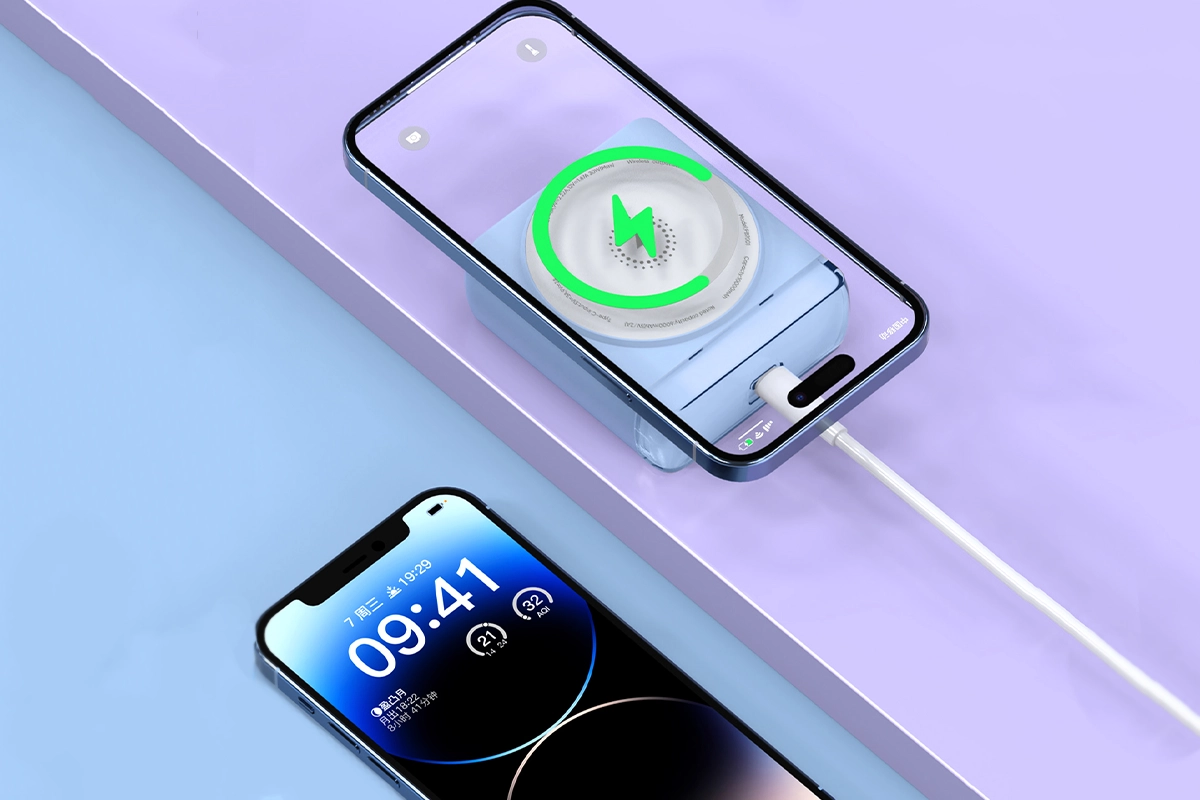
VIDVIE 10000mAh Wireless Power Bank offers ample power to keep your devices going. Experience convenient wireless charging at 15W and blazing-fast wired charging with PD20W technology.Get your quote!
FAQ
Can you take a power bank on an airplane?
Yes, you may generally bring a power bank on a flight as carry-on luggage. However, there are limits to the capacity of portable battery allowed on flights, so it is critical to check with the airline and follow their guidelines to prevent any problems at the airport.
Can I charge my phone with a power bank while charging the power bank?
Yes, most power banks allow you to charge your devices while the battery bank is charging. This simultaneous charging feature ensures that both your power bank and devices are fully charged and ready to go when you need them.
How long do banks power last?
The charging time of a power bank depends by its capacity and the charging technique utilized. Smaller capacity battery packs often take a few hours to fully charge, however bigger capacity ones may take longer. Fast-charging technology can also shorten the charging time of compatible power banks.